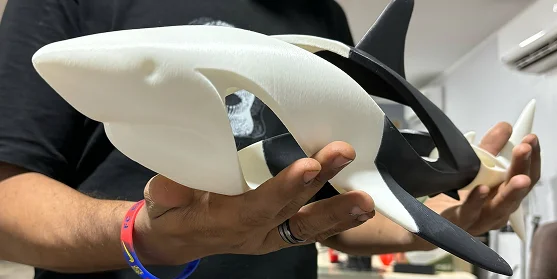
The development of new products starts way before anything begins on the assembly line. Through the combination of CAD design and additive manufacturing, it is possible to turn vague ideas into working parts through the creation of prototypes.
Accelerating Innovation: CAD & Product Design Services in Modern Manufacturing
The process of product development has undergone drastic changes from an unorganized and lengthy one. In the old days, creating a conceptual design for the product involved drawing in 2D by hand, communicating with different machining shops through weeks of discussion, and paying up front for costly tools for basic ergonomic testing.
In today’s world, computer-aided design (CAD) has become the digital platform on which all modern industrial engineering is based. Not only does CAD provide an attractive 3D image, but it also includes the creation of parametric geometry, mechanical tolerances, and stresses. With direct integration into the additive manufacturing process, digital designs can become actual parts in mere hours.
Moving from Concept Sketch to Precision Engineering
A successful product design journey balances functional engineering with aesthetic appeal and manufacturability:
- Concept Development and Parametric Modeling: Transforming the freehand sketches, physical samples, or 2D drawings into full-fledged parametric models that work practically in the real world.
- Design for Additive Manufacturing (DfAM): Optimizing wall thickness, infill structures, overhangs, and assembly clearance requirements to match 3D printing technologies in order to avoid any structural vulnerabilities during manufacturing.
- Rapid Prototyping and Reverse Engineering: Rebuilding old physical parts by using 3D scanning and modeling to build old mechanical parts, to create custom enclosures, or redesign ergonomic parts.
This professional workflow saves costs on expensive redesigns before spending large budgets on mass production using injection molding or CNC machining technologies.
The Rising Demand for 3D Printed Models in Egypt
Egypt’s industrial, commercial, and creative landscapes are undergoing rapid technological transformation. From consumer electronics startups to architectural development firms, sectors across the country increasingly rely on localized additive manufacturing to outpace competition.
The surge in demand for 3D printed models in Egypt spans multiple industries:
- Architectural and Master Planning Scale Models: The real estate industry as well as urban planners require scale models with utmost accuracy in order to show their residential developments, hotels, and master plans for retail to their investors as well as other officials.
- Functional Testing With Prototypes: Industrial engineers need accurate SLA as well as FDM printing technologies to perform functional testing before manufacturing mechanical assemblies, snap-fit assemblies, and flow rate designs.
- Special Application 3D Printing: Event planning and marketing companies require 3D printing services on a large scale to produce custom trophies, exhibits, and custom signage.
Gazelle 3D Tech: Egypt’s Hub for CAD and Additive Manufacturing
Connecting virtual CAD design to physical production needs comprehensive manufacturing expertise. Gazelle 3D Tech is a manufacturing company that offers combined services for CAD & Product Design, along with one of the leading 3D printing centers in Egypt.
Gazelle 3D Tech takes care of all the manufacturing process stages, from the creation of the concept drawings and preparation of files to 3D printing and finishing. Utilizing manufacturing technologies such as FDM and SLA, Gazelle 3D Tech creates highly detailed architectural scale models, functional engineering prototypes, and various creative installations. Offering fast delivery time frames of 24 to 48 hours along with microns of accuracy, Gazelle 3D Tech is the ideal local partner for manufacturers who need top-quality additive manufacturing services in Egypt.
FAQs
- Can Gazelle 3D Tech build a 3D model if I only have a 2D sketch or photo?
Yes. Through dedicated CAD and product design services, engineering teams can turn hand-drawn sketches, dimensioned 2D blueprints, reference photos, or physical samples into clean, parametric 3D CAD files ready for fabrication.
- Why choose 3D printing over traditional handmade architectural modeling?
3D-printed architectural models are typically 30% to 60% less expensive than handmade wooden or foam models, achieve finer facade detailing, eliminate human assembly variation, and can be completed in days rather than weeks.
Conclusion
Getting from the conception stage to a tangible product involves more than just creativity; it demands meticulousness. Using professional CAD modeling skills, companies can guarantee that their products will be designed for performance from the very beginning. Working with experts in the additive manufacturing industry, such as Gazelle 3D Tech, will enable businesses and creatives to transform complicated CAD designs into breathtaking 3D-printed models in Egypt.