
Every facility manager, maintenance engineer, and production supervisor has been there. A machine goes down. The part that failed is identifiable. The problem is that it’s discontinued, the supplier is overseas, the lead time is eight weeks, and the production line can’t wait eight weeks.
This is the spare parts problem, and it’s more common than the manufacturers of the original equipment would like to admit. Parts get discontinued. Suppliers close. Supply chains break down. And the equipment that a business depends on sits idle while the procurement process grinds through channels that weren’t designed for urgency.
3D printing spare parts is changing that equation, not for every part, but for more of them than most people initially expect.
How It Actually Works
The process starts with a digital file, either a CAD model of the original part, a file provided by the manufacturer, or a model created through reverse engineering from the physical part itself. Once the file exists, the part can be printed on demand, in the right material, to the specification required.
For parts that are no longer available from the original source, or available only with lead times that don’t work, this closes a gap that previously had no good solution. The digital file becomes the inventory. The printer becomes the supplier. And the turnaround time compresses from weeks to days or hours depending on the complexity of the part.
What Can Actually Be Printed
This is the question that stops most people from exploring 3D printing spare parts further than a first conversation, and the honest answer is broader than most people expect.
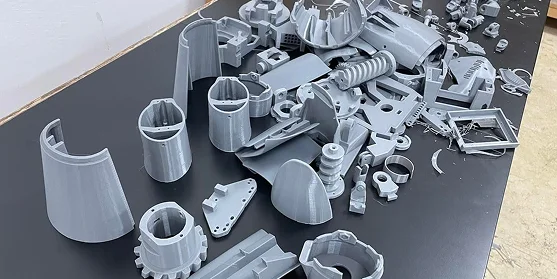
Structural housing components, brackets, covers, and casings. Jigs, fixtures, and tooling aids that support production processes. Gears, pulleys, and mechanical components in engineering-grade materials that handle real mechanical loads. Fluid system components in materials compatible with the relevant chemicals or temperatures. Electrical enclosures and mounting components.
The material range available through professional 3D printing spare parts services covers standard plastics for non-load-bearing applications, engineering-grade nylons and composites for structural and mechanical parts, heat-resistant materials for components near heat sources, and flexible materials for seals and gaskets where some give is required.
What 3D printing doesn’t replace, at least not yet in most commercial contexts, is high-precision metal components where tolerances, surface finish, and material properties need to meet specifications that additive manufacturing can’t consistently achieve. But the range of what is printable keeps expanding, and for a significant portion of the spare parts problem, it’s already a viable answer.
The Cost and Speed Comparison
The traditional spare parts supply chain has costs that aren’t always visible in the line-item procurement price. Downtime while waiting for a part has a cost. Emergency shipping has a cost. Holding inventory of rarely-needed parts ties up capital and warehouse space.
3D printing spare parts on demand eliminates most of these. No inventory to hold. No minimum order quantities that force you to buy more than you need. No eight-week lead times for a part that can be printed locally in forty-eight hours.
For businesses where equipment downtime has a measurable daily cost, the economics shift quickly.
Gazelle 3D works with businesses in Egypt and the broader region on exactly this, providing on-demand 3D printing spare parts that get equipment running again rather than waiting on supply chains that weren’t built for urgency.
Conclusion
The spare part you can’t find doesn’t have to mean weeks of downtime and expensive workarounds. For a growing range of components, 3D printing offers a faster, more flexible alternative to traditional procurement, one that’s worth exploring before the next breakdown makes the question urgent. Visit Gazelle 3D and find out what’s actually printable for your specific situation.
FAQs
How do I get started if I don’t have a CAD file for the part I need?
Gazelle 3D can work from the physical part itself, using measurement and reverse engineering to create a printable file from what you have. Bring the part, describe what it needs to do, and the team can assess whether 3D printing is viable and what the process looks like from there.
Are 3D printed spare parts as strong as the originals?
It depends on the material and the application. For many non-load-bearing components, printed parts perform comparably to the originals.